Key takeaways
- Water around the washer, even a small puddle, is one of the clearest signs it needs repair.
- Loud banging, grinding, or squealing noises usually point to a worn part, not something that fixes itself.
- Standing water after a cycle means the washer isn’t draining, and shouldn’t be run again and again hoping it clears.
- A drum that won’t spin or shakes violently can leave laundry soaking wet and put extra stress on the machine.
- Clothes that come out dirty, soapy, or still wet are a quieter sign of a developing problem.
Stop using the washer right away if you notice a burning smell, smoke, a breaker that keeps tripping, or water that keeps spreading. If more than one of these signs sounds familiar, book a washer diagnostic before running another load.
Laundry piles up fast when the washer in your Charlotte home starts acting up. Maybe there’s a puddle on the laundry room floor, a strange noise during the spin cycle, or clothes that come out of the wash still soaked. It’s easy to wonder whether it’s a quick fix or a sign the washing machine needs repair.
This guide walks through the five most common warning signs homeowners in Charlotte, NC run into with their washing machines: leaks, loud noises, drainage problems, spin and vibration issues, and poor cleaning results. For each one, you’ll find what it usually means, what you can safely check yourself, and when it’s time to call a washer repair technician. If more than one appliance is acting up, our full list of appliance repair services covers washers, dryers, refrigerators, and more. Catching these signs early can help you avoid water damage, a ruined load of laundry, or a bigger repair bill down the road. This guide works just as well if you’re a renter with landlord approval to arrange repairs, or a property manager keeping laundry appliances running across several units.
Sign #1: Water Is Leaking Around the Washing Machine
A puddle on the floor near your washer is one of the clearest signs something is wrong. Even a small amount of water after every load is worth taking seriously, because leaks tend to get worse, not better, over time.
Several things can cause a washing machine to leak. On front-load washers, a worn or cracked door gasket is a common culprit, since that rubber seal has to hold water in through every wash and spin cycle. Loose or cracked water inlet hoses, a damaged drain hose, a faulty water inlet valve, and a worn tub seal can all let water escape as well. Overloading the washer or using too much detergent can also cause water and suds to spill out around the door or lid.
Detergent type matters too. Using more detergent than needed, or using regular detergent in a high-efficiency washer that calls for a low-suds formula, can create extra suds that escape around the door or lid even when nothing else is wrong. If you’ve recently switched detergents or started using more than the recommended amount, cutting back is worth trying before you assume a part has failed.
Pay attention to when the leak shows up. Water that appears while the washer is filling often points to a hose or inlet valve, while water that shows up during the wash or spin cycle is more likely related to the door seal, drain hose, or tub itself. Sharing these details with a technician can speed up the diagnosis.
If your washer is leaking, stop the cycle and, if it’s safe to do so, shut off the water supply to the machine. Avoid running another load until you know what’s causing the leak, since continued use can lead to water damage on flooring, baseboards, or the wall behind the washer. Leaks are one of the most urgent reasons to schedule washing machine repair, because the longer water sits, the more damage it can cause to your home.
What to check before calling
Before you book a repair, there are a few safe things you can check on your own:
-
- Don’t start another load if water is actively spreading across the floor.
- Check the visible hose connections at the back of the washer to see if anything looks loose.
- Make sure the drain hose hasn’t slipped out of the standpipe or sink.
- Note whether the leak happens while the washer is filling, washing, draining, or spinning.
- Take a photo of where the water is coming from so you can show the technician.
- If the washer was recently installed, moved, or reconnected, double-check that the hose connections were tightened fully.
If you notice signs of an electrical issue along with the leak, such as sparking, a tripped breaker, or a burning smell, stop using the washer and call a professional rather than inspecting it further yourself.
Sign #2: The Washer Makes Loud Banging, Grinding, or Squealing Noises
A washing machine that suddenly gets noisy is trying to tell you something. The type of noise can offer a clue about what’s going on, even though it’s not a substitute for an actual diagnosis.
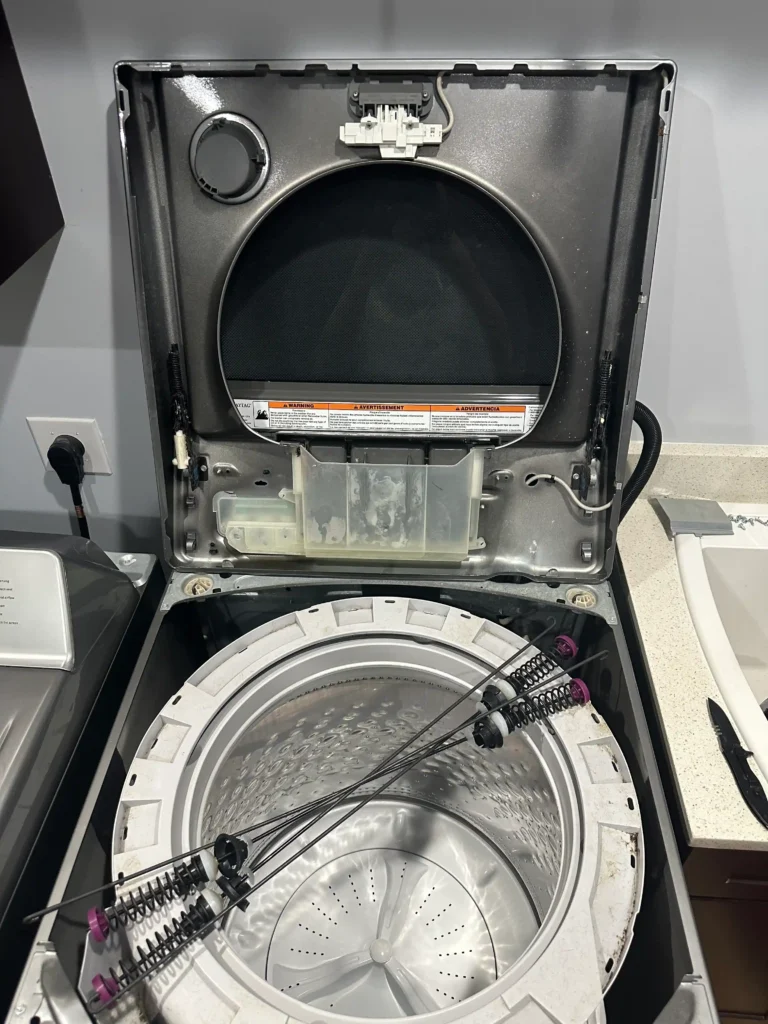
Banging or thumping during the spin cycle often points to an unbalanced load, a washer that isn’t sitting level, or a suspension problem inside the machine. Grinding noises may indicate a worn drum bearing, a failing motor or pump, or even a small object caught somewhere it shouldn’t be. Squealing sounds are frequently linked to a worn drive belt or pulley.
Not every washer has a belt, though. Many newer machines use a direct-drive motor mounted straight to the drum, so persistent grinding on these models is more likely tied to the motor coupling or drum bearing rather than a belt. A technician can usually narrow this down quickly by listening for exactly when the noise happens during the cycle and checking the drum for any play or looseness.
None of these noises should be ignored, especially if they happen on every cycle. A noise that only shows up with a heavy, unbalanced load might resolve once you rebalance it, but a noise that continues with smaller, evenly loaded washes is a stronger sign that a part has worn out and the washer needs repair.
| Noise | Possible Cause | Urgency | Recommended Next Step |
|---|---|---|---|
| Banging or thumping | Unbalanced load, uneven leveling, suspension issue | Moderate | Rebalance the load; schedule repair if it continues |
| Grinding | Worn drum bearing, failing motor or pump, foreign object | High | Stop heavy use and book a diagnostic |
| Squealing | Worn drive belt or pulley | Moderate | Schedule repair before the belt fails completely |
| Metal scraping | Loose or damaged internal component | High | Stop using the washer and call a technician |
When noise is urgent
Some signs mean it’s time to stop using the washer right away, not just schedule a repair for later.
Stop using the washer if you notice: metal scraping, a burning smell, smoke, or a breaker that keeps tripping. These point to a possible electrical issue, and continuing to run the washer can create a safety hazard.
If you see any of these signs, unplug the washer if it’s safe to do so and call a professional rather than trying to inspect the motor or wiring yourself. It’s also a good idea to mention exactly when you first noticed the smell or noise when you call, since that detail can help the technician prioritize your appointment.
Sign #3: The Washer Will Not Drain or Leaves Standing Water
Opening the washer at the end of a cycle to find water still sitting in the drum is a frustrating, and very common, repair sign. It almost always points to something in the drainage system.
A clogged drain hose or filter is one of the most frequent causes, especially if you regularly wash items with lint, pet hair, or small objects in the pockets. A failed or blocked drain pump can also prevent water from leaving the tub, as can a faulty lid switch or door lock that keeps the machine from completing its cycle. In some cases, a control board issue or error code can interrupt the drain step entirely.
Many top-load washers have an accessible lint or coin trap near the agitator, and most front-load washers have a small drain filter behind a panel near the bottom of the cabinet. Checking and clearing visible debris from one of these areas is one of the few drain-related fixes most homeowners can safely handle themselves. If you don’t see an accessible filter, or clearing it doesn’t solve the problem, that’s a sign the blockage or failure is further inside the machine.
If your washer has stopped draining, avoid running the cycle again and again hoping it clears itself. Repeated attempts rarely solve a mechanical blockage and can make the standing water sit even longer, which leads to odors and added strain on the pump and motor. This is one of the most common reasons Charlotte homeowners book a washer repair appointment, since a technician can quickly tell whether the issue is a simple clog or a failed pump.
Is it safe to keep running the washer?
It’s tempting to restart the cycle a few more times to see if the water finally drains, but that approach usually does more harm than good. Forcing repeated cycles puts extra strain on the pump and motor and can lead to overflow if the tub is already full.
If water has been sitting in the drum for a while, you may also notice a sour odor starting to develop. Rather than keep experimenting, it’s best to leave the washer as-is, mention how full it is when you book service, and let a technician identify the blockage or failed part safely.
Sign #4: The Drum Will Not Spin or the Washer Shakes Excessively
Spin problems and excessive shaking often get lumped together because homeowners notice them at the same time, even though the underlying causes can be different.
A washer that won’t spin at all may leave your clothes soaking wet at the end of the cycle. Possible causes include a faulty lid switch or door lock, a broken drive belt, a worn-out motor, a control board issue, or simply a load that’s too unbalanced for the machine’s sensors to start the spin cycle.
Excessive shaking, on the other hand, is frequently tied to an unlevel washer, worn suspension rods or shock absorbers, or a drum that’s overloaded on one side. Front-load and top-load washers can both develop these issues over time as parts wear down.
If you recently moved the washer, installed it on a new floor, or it’s never quite sat right, start by checking the leveling legs at all four corners. A washer that rocks even slightly when you press down on one corner needs to be releveled before you can rule out anything more serious.
| Symptom | Possible Causes | What to Try First |
|---|---|---|
| Won’t spin | Lid switch, door lock, drive belt, motor, unbalanced load | Redistribute the load and confirm the door or lid is fully latched |
| Shakes violently | Uneven leveling, worn suspension rods or shock absorbers, overloaded drum | Check that all four feet are level and the load isn’t too heavy on one side |
Why vibration should not be ignored
A little shaking during the spin cycle can feel like a minor annoyance, but it adds up over time. Repeated vibration puts stress on the drum, suspension system, and hose connections, and it can even loosen flooring or nearby cabinetry.
If you’ve already checked that the washer is level and the load is balanced, and it’s still shaking or refusing to spin, that’s a sign of a developing mechanical issue rather than a one-time fluke. Addressing it early can help prevent more expensive damage later.
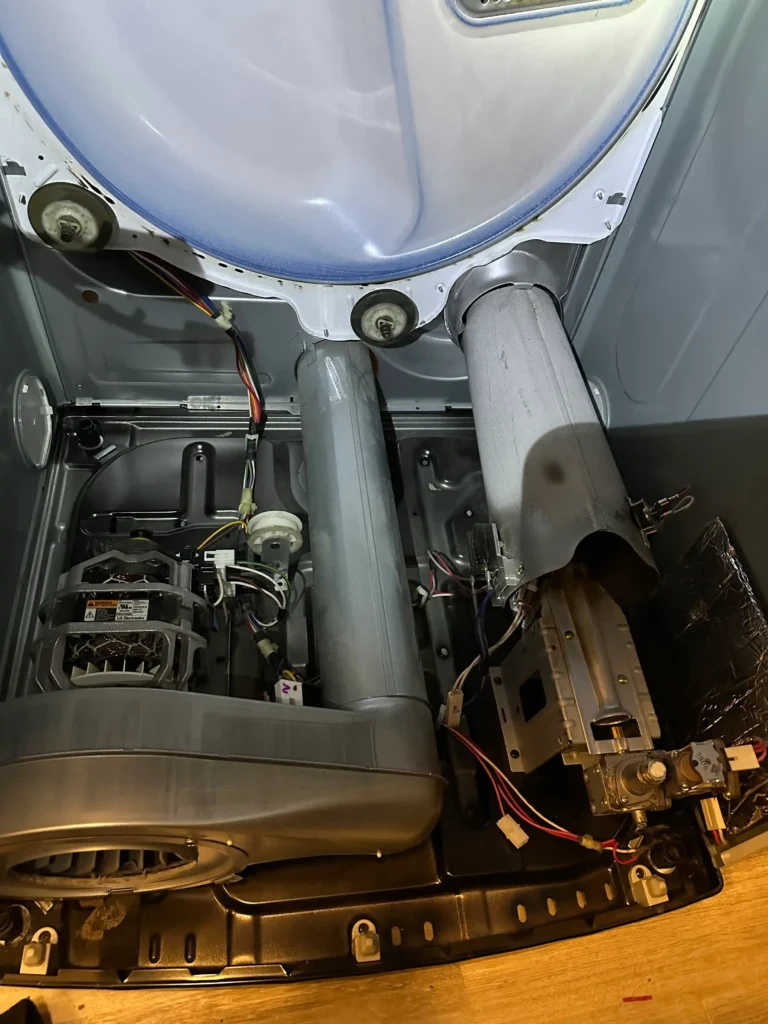
Sign #5: Clothes Come Out Dirty, Soapy, or Still Too Wet
Not every washing machine problem announces itself with a puddle or a loud noise. Sometimes the washer keeps running like normal, but the results tell a different story: clothes that still look dingy, detergent residue left in the fabric, a sour smell, or laundry that’s far wetter than it should be after the spin cycle.
If this keeps happening even when you’re using the right amount of detergent and a reasonable load size, it’s worth looking at the washer itself rather than your laundry routine. A weak water inlet valve can mean clothes aren’t getting properly soaked and rinsed. Drainage problems or a failing spin cycle can leave too much water and soap behind. A clogged filter or a worn agitator can also reduce how well the washer cleans and rinses each load.
It’s also worth double-checking your cycle and temperature settings. A quick-wash or cold cycle that’s too short may not give detergent enough time to fully dissolve and rinse out, which can look like a mechanical problem even when the washer itself is working normally.
This sign is easy to live with for weeks, since nothing about it feels urgent. But repeated rewashing wastes water, detergent, energy, and your time, and it’s often an early signal of a mechanical issue that will only become more noticeable.
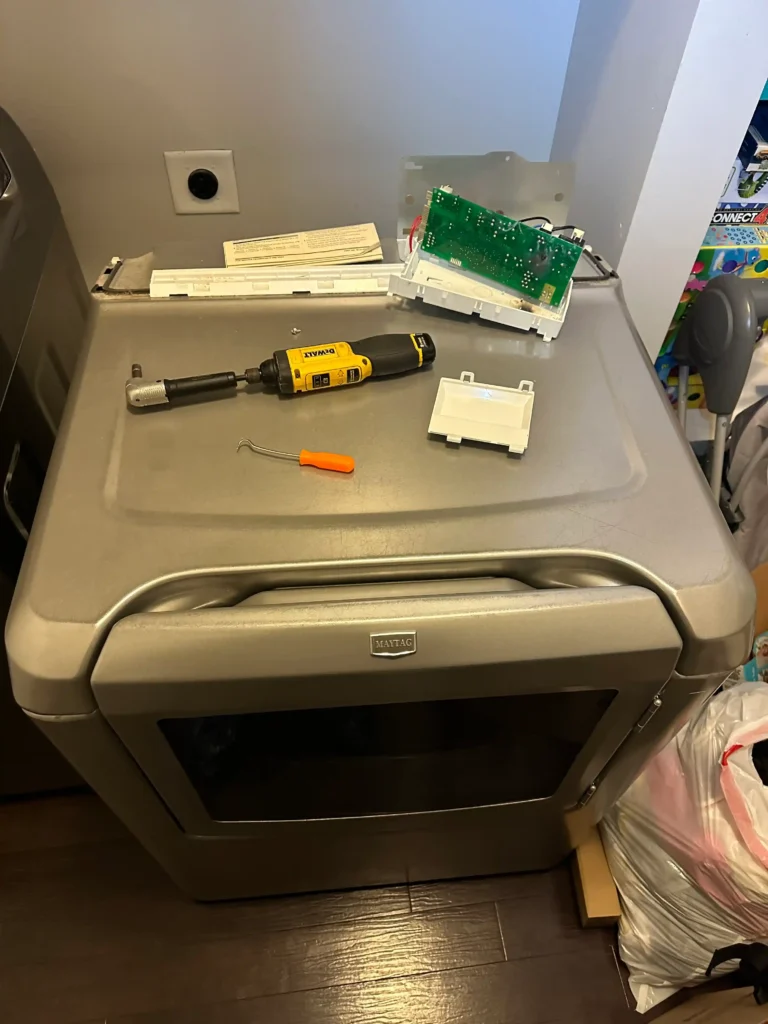
When to Call CLT Fixer for Washing Machine Repair in Charlotte, NC
If any of these five signs sound familiar, the next step is a proper diagnosis rather than another round of guesswork. Booking a washer repair appointment with CLT Fixer is straightforward:
-
- Schedule online or by phone, and describe the symptoms you’re seeing.
- One of our certified technicians visits your home, inspects the washer, and identifies the part or issue causing the problem.
- We explain what’s wrong in plain language and provide a clear estimate before any repair work begins.
- You decide whether to move forward, fully informed about the cost and what it will fix.
We work on washing machines from most major brands, including Samsung, LG, Whirlpool, GE, Frigidaire, Bosch, Maytag, KitchenAid, Electrolux, Amana, and Kenmore. Every completed repair is backed by our 90-day workmanship warranty, and booking online gets you $20 off your repair. If you move forward with the repair, the service call fee is credited toward the total cost.
We schedule appointments Monday through Saturday, 7:00 AM to 8:00 PM, with same-day availability whenever our schedule allows. Whether your washer is leaking, won’t drain, or just isn’t cleaning clothes the way it used to, our team can help you decide if it’s worth repairing or time to consider a replacement.
As a general guideline, many repair technicians weigh the cost of the fix against the washer’s age: if a repair would cost more than roughly half the price of a comparable new machine, and the washer is already several years old, replacement often makes more financial sense. Rather than asking you to guess, we walk through that comparison with you after the diagnostic so you can make an informed decision.
If your dryer is giving you trouble too, we also handle dryer repair for the same major brands, so laundry room problems can often be solved in one visit.
Ready to get your washer looked at? Book washing machine repair online, browse our full list of appliance repair services, or contact us with any questions before you schedule.